SELECTING GRIDS FOR YOUR APPLICATION
There are a range of plain grids, support grids and more available for use, see our TEM gride selection guide.
Large continuous structures: an open mesh, 200 (lines/inch) or less is best. However, the support may have flaws or is damaged, therefore an elastic and strong film is required. Formvar with a thin coating of carbon provides these features.
At the other extreme, resolution and high contrast are major consideration. So if the final published magnification is higher than x600k, ideally no support is used under the specimen, since any support lowers contrast and resolution, however little that may be.
Fibrous structures: or other material that may stretch across a small hole in a support film can provide that opportunity. Lacy or holey films and plain, very fine mesh grids (>1000 mesh) could also be used. Without a support immediately under the object of interest, dark field electron microscopy is also possible.
Many applications fall between the above two extremes.
Small particles: finer 300 mesh grids give better support; this results in less film breaking, and less specimen movement is likely. Many users would find the common Formvar with thin carbon adequate, but thin (or no) Formvar and a thicker (self supporting) carbon film will be stronger, but less elastic.
For a given electron density a Formvar film shows slightly more intrinsic structure and is weaker than a carbon film. Pure carbon films, if evaporated onto mica and transferred to grids, do not adhere well and will float off on any solution. The preferred method for producing carbon films is through evaporation onto Formvar and a thicker layer of carbon, ~60nm. Then the user can dissolve the Formvar in the laboratory - retaining a little Formvar on the grid bars which anchor the carbon film.
Many failures using the negative staining method and support films relate to too much or too little retention of the negative stain on the grid. A large black area is not likely to reveal any fine structures and heats up quickly under the beam, destroying that square of material. Even distribution is achieved by repeated applications and blotting of the specimen grid and the negative stain. For the final blotting it is important not to remove too little or too much of the staining solution.
SUPPORT FILM
There are various support films available for coating of plain grids, they have different procedures for use. The steps for preparation of adhesive coated grids to make carbon coated grids is below:
- Submerge about 5cm of Scotch clear tape (3M) into 10ml of Dichloroethane (Ethylene Dichloride); shake and discard the tape.
- The solution now becomes “grid-glue”
- Place the grids (dull side up) on a piece of filter paper (dust-free room).
- Take a pipette and place a drop of“grid-glue” on top of each grid.
- Let the grids dry.
- The grids are now ready to pick up the carbon foil and make the carbon coated grids.
Reaction of Ni and Cu Grids
How do Nickel and Copper Grids React with Periodic Acid?
Periodic Acid + Ni Ni-Periodate + H2 Periodic Acid + Cu Cu-Periodate + H2
In this case you should use Gold Grids.
GRID STORAGE & SHELF LIFE
TEM grids should be stored in a dry, dust-free environment. Which is essential to prevent contamination and mechanical damage. For long-term storage or to prevent the oxidation of copper and degradation of the coating, grids should be stored in a vacuum desiccator.
While copper grids themselves can last for years, the Formvar/carbon film has a shorter shelf life. Unused coated grids can typically last for several months to a year if kept in a clean, dry environment.
Always note: The Formvar film can degrade over time, leading to broken films. High humidity accelerates the degradation of the film and oxidation of the copper grid.
Quality storage boxes, such as the TEM Grid Boxes, allow for the safe storage of up to 96 grids and include indexed, secure storage for easy identification.
Ideal storage conditions:
- Dry conditions – ideally in a desiccator or sealed container with silica gel
- In the original grid box to avoid dust Room temperature, avoiding heat or large temperature changes
- Some labs also glow discharge the grids before use to remove surface contamination.
SAMPLE PREPARATION
Cleaning grids is vital before sample preparation should begin. Using glow discharge or plasma cleaners is ideal for this purpose.
See here for Glow Discharge cleaners
See here for Plasmsa Decontaminators
Using the right process for you sample preparation will ensure quality imaging. Thin samples are required, >100µm to allow electrons to move through the sample, which also means the nanoparticles used to prepare the sample should be >100µm and also only be in a single layer.
Equipment and Materials:
- Sample
- TEM grid coated with carbon film
- Pipette for 20µl
- Sonicator/agitator
- Grid tweezers (self-closing)
- Drying light (optional)
Step1: Prepare the sample by dilution with water, add nanoparticles.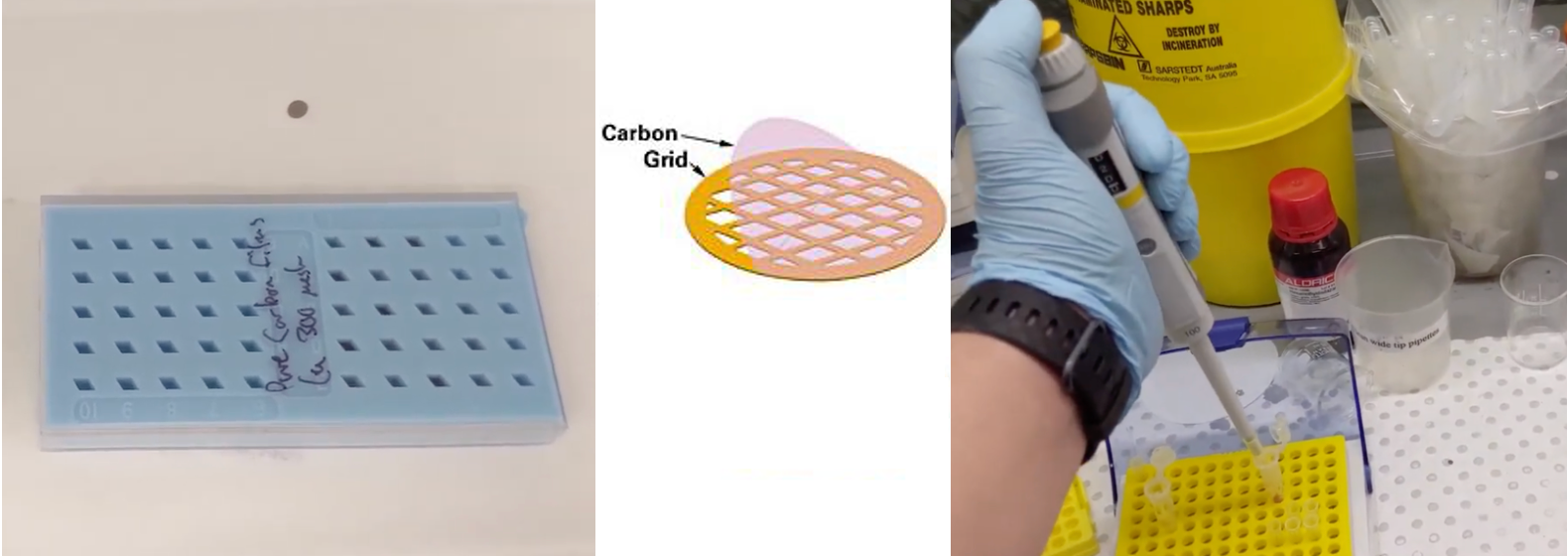
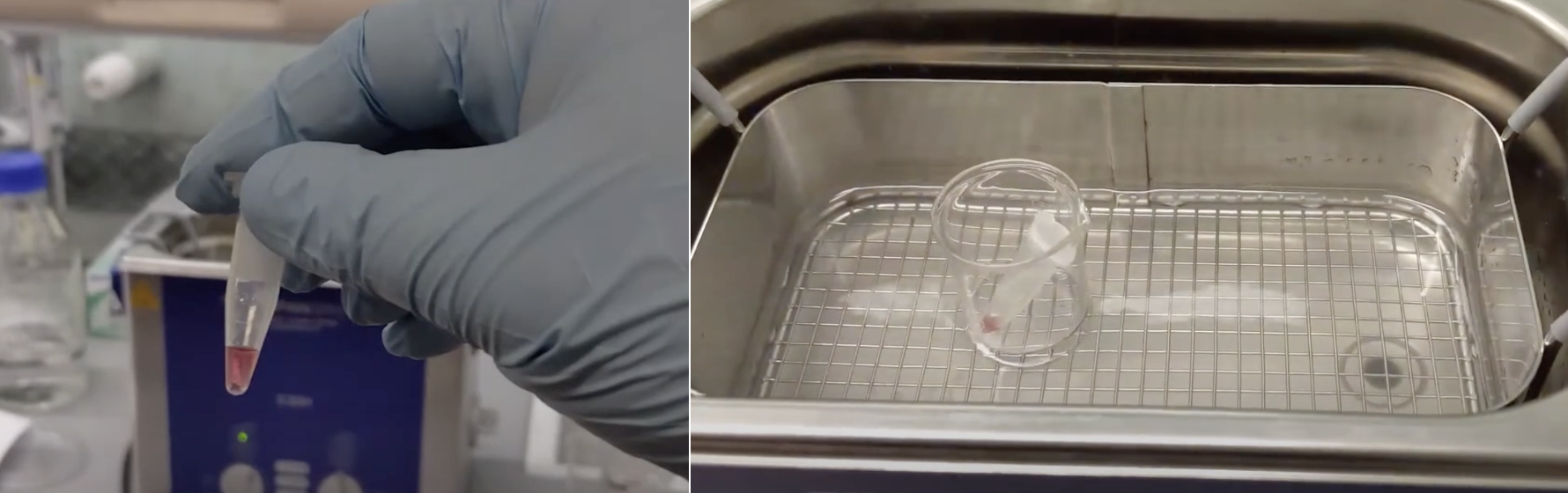
Step 2: Sonicate the sample/nanoparticles to remove any clumps or aggregation of sample.
Step 3: Draw 20µl of the sample and nanoparticle mixture and drop cast onto TEM grid coated with carbon film. Evaporate the liquid from the grid for ~1hr. The grid is then ready to be analysed in the TEM.
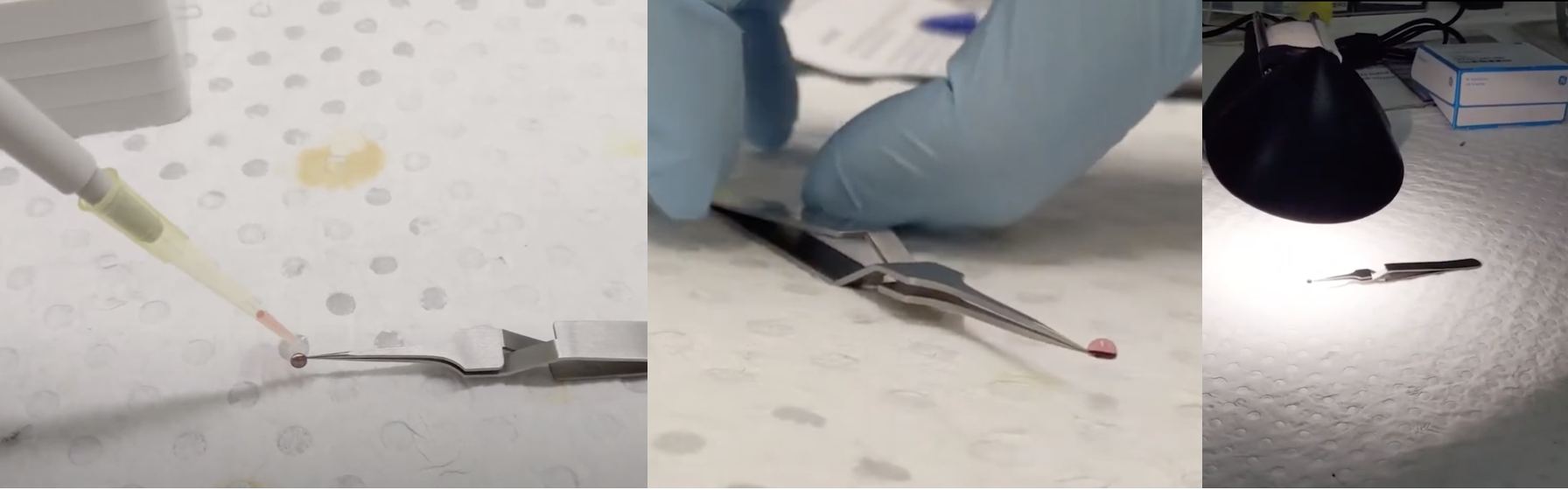
Here is a video showing the steps of sample preparation for drop cast samples followed by a demonstration of the capabilities of the JEOL F200 by the Microscopy Australia network at the Electron Microscope Unit (EMU) within the Mark Wainwright Analytical Centre (MWAC) at UNSW Sydney.
Was this article helpful?
That’s Great!
Thank you for your feedback
Sorry! We couldn't be helpful
Thank you for your feedback
Feedback sent
We appreciate your effort and will try to fix the article