Quorum Technologies off two glow discharge systems, MiniQGD and the GloQube Plus.
Preparation of TEM Grids using the GloQube Plus
Transmission Electron Microscopy (TEM) is a high resolution imaging technique that provides details of internal structure and morphology of a wide range of specimens.
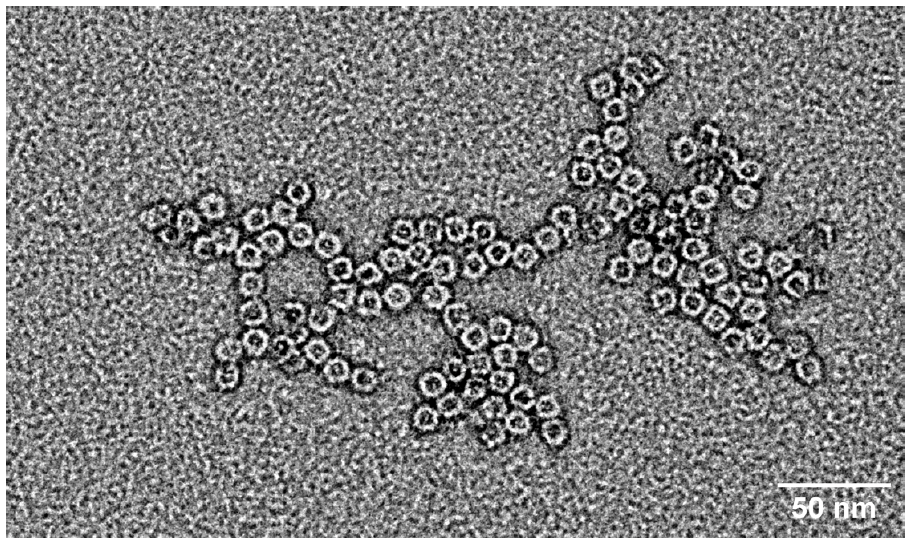
Figure 1. Native ferritin on in-air glow discharged carbon TEM support, courtesy of Paul Simpson (Imperial College London).
In TEM, a beam of electrons is focused by a condenser lens into a thin, coherent beam onto a sample. Electrons that are able to transmit through the sample are focussed by an objective lens into an image on a fluorescent screen. Areas of the sample where more electrons are able to transmit are observed as light areas, and those where few electrons are able to transmit are observed as dark areas on
micrographs.1
TEM samples are prepared on specialised TEM grids, which support the specimen during imaging while allowing the electron beam to pass through. TEM grids are typically made of copper, nickel or gold, and coated with a carbon support film.
Due to the hydrophobic nature of carbon, adhesion of water-based samples to the grid can be challenging. This application note explains the reasons for using glow discharge in the preparation of TEM samples and highlights the differences between glow discharge techniques.
What is Glow Discharge? | |
A glow discharge plasma is a partially ionised low-pressure gas. It is produced by application of a high voltage across two electrodes in a low pressure chamber (10-1 to 10-2 mbar). Electrons are accelerated by the electric field and inelastically collide with neutral gas molecules, causing excitation and ionisation. This process generates free radicals and/or ions. The characteristic glow that is observed arises from photons emitted as excited species return to their ground states. The plasma is sustained through the attraction of positive ions to the cathode, where they bombard the surface, ejecting more electrons which continue the ionisation process.2 | 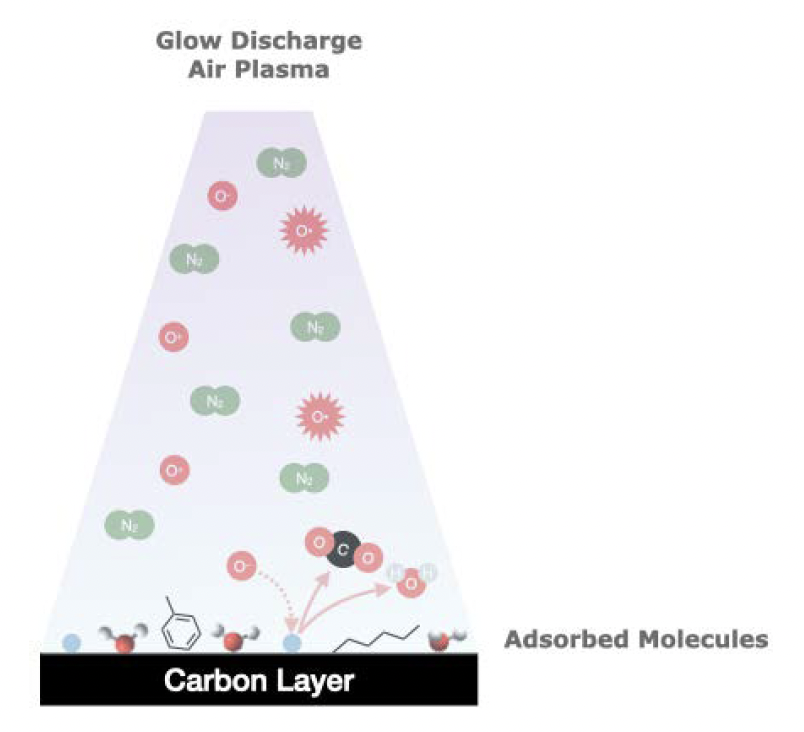 Figure 2. Illustration of in air glow discharge plasma. Figure 2. Illustration of in air glow discharge plasma. |
Why do we need to glow discharge TEM grids? | |
1. Remove contaminants Even freshly prepared carbon layers for TEM grids will have unwanted adsorbates like water and low molecular weight material (LMWM) on the surface, typically adsorbed from the air (Figure 3). These contaminants need to be removed by a glow discharge before using the grids to ensure optimal sample spreading. 2. Improve hydrophilicity and enhance sample adhesion The deposited carbon layer on the TEM grid has a variably charged surface that is usually hydrophobic, thus even spreading of water-based sample suspensions is difficult (Figure 4). Glow discharge can be used to increase the hydrophilic nature of TEM grids to aid sample adhesion. 3. Improve sample contrast Observation of biomolecules in ambient TEM conditions also involves staining the sample with heavy metals. TEM supports that have not been treated with a glow discharge will result in uneven staining and cause poor contrast in the image. 4. Prepare grids for cryo-TEM Glow discharge of TEM prior to vitrification in cryo-TEM is an essential step. Not only will glow discharge reduce contamination and promote uniform sample spreading as mentioned previously, it also helps to promote thin vitrified ice formation and prevent particle clumping.3 5. Orient molecules to reveal areas of interest Chemical vapours can be used to tailor the TEM grid surface and influence the orientation of molecules on the surface. For example, alkylamines such as amylamine or hexylamine, can be used to functionalise the carbon support with amine-containing groups. These positively charged amine groups will attract negatively charged areas of the sample, and result in a preferential orientation. Other examples include the use of ammonia to create hydrophilic and mildly basic surfaces, and the use of organic thiols to introduce sulfhydryl groups to the grids surface. | 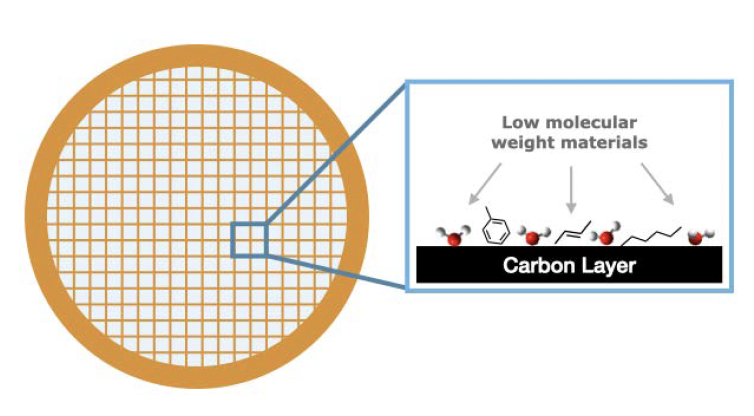 Figure 3. A typical TEM grid with carbon film and representation of surface adsorbates. Figure 3. A typical TEM grid with carbon film and representation of surface adsorbates.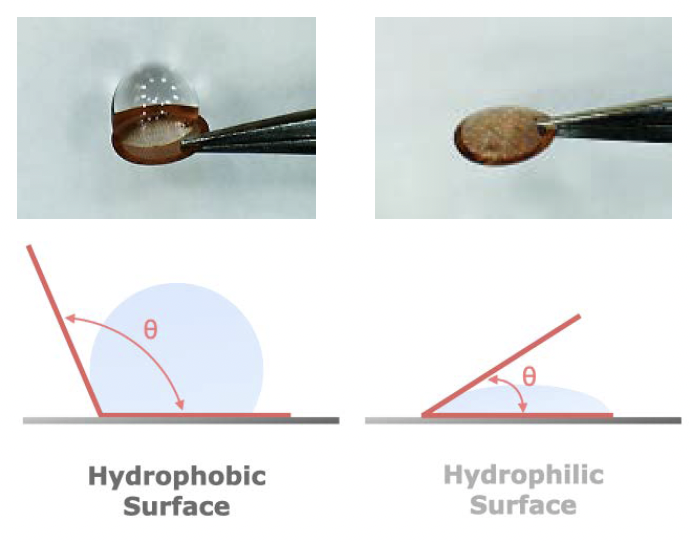 Figure 4. A: Carbon support TEM grid before glow discharge with a droplet of water showing its hydrophobicity and corresponding contact angle shown below. B: Carbon support TEM grid after glow discharge with a droplet of water showing its hydrophilicity and corresponding contact angle shown below. Figure 4. A: Carbon support TEM grid before glow discharge with a droplet of water showing its hydrophobicity and corresponding contact angle shown below. B: Carbon support TEM grid after glow discharge with a droplet of water showing its hydrophilicity and corresponding contact angle shown below. |
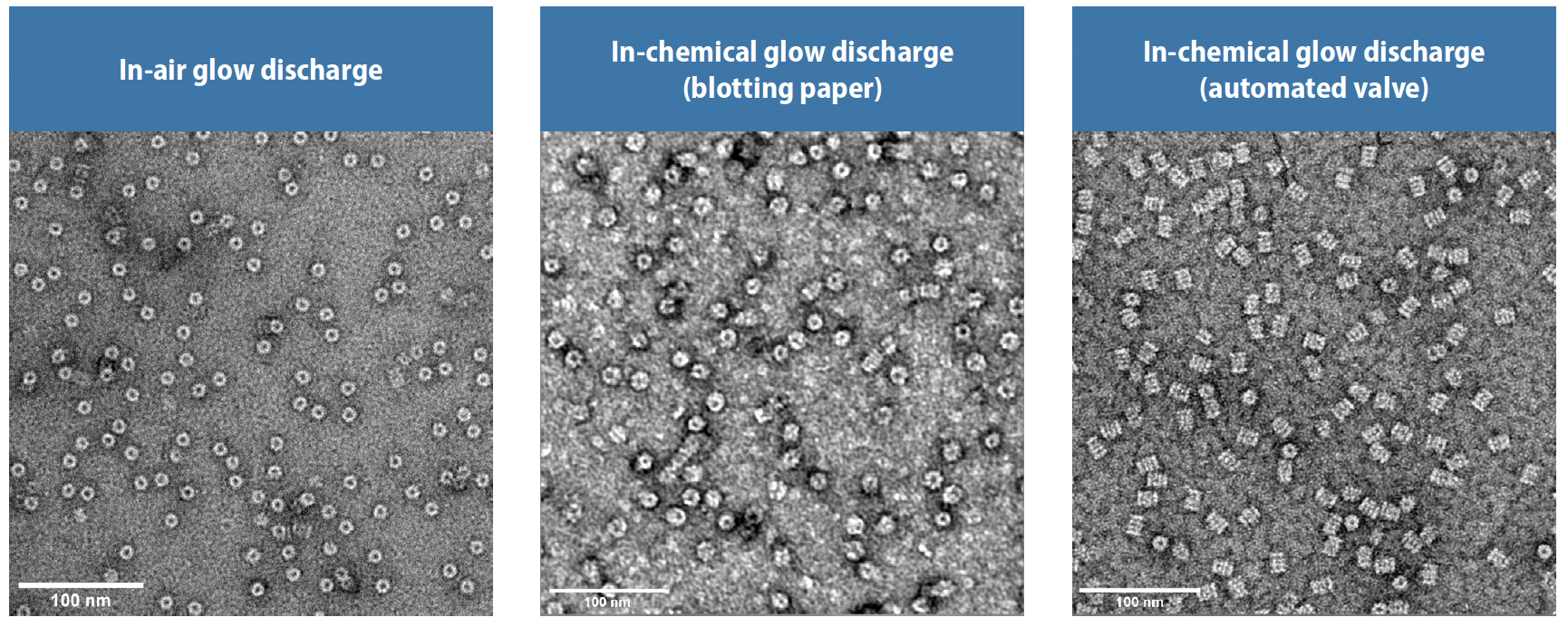
Figure 5. Left: In-air glow discharge of 20S proteasome, showing mostly top-view orientation. Centre: TEM grid carbon support modified by blotting paper method with amylamine and used for 20s proteasome sample application. Right: In-amylamine glow discharged grid and application of 20S proteasome, using an automated valve system (GloQube Plus). Desired side-view orientation of the protein is achieved (89%).
By using an automated valve system to introduce chemical vapour into the chamber, as used in the GloQube Plus, the in-chemical glow discharge can be achieved in a consistent and controlled manner (Figure 5).
Glow Discharge Techniques
To ensure even spreading of a sample across the TEM grid, it is crucial that an appropriate glow discharge method is selected. Depending on the application, glow discharge can either be completed in air or in chemical vapour. Table 1 shows examples of suggested surface
modifications for specific key applications.
Table 1. Key examples of glow discharge techniques used for different applications.
Application | Atmosphere | Surface Type | Surface Charge | Advantages |
TEM grids | Air | Hydrophilic | (-) | No aggregation of particles on the grid square boundaries |
Nucleic Acids (TEM grids, Mica, HOPG*) | Air | Hydrophilic** | (+) | Improved binding of nucleic acids to surface |
Positively charged proteins (TEM grids) | Hydrocarbons | Hydrophobic | (-) | Covalent binding to the grid surface for positively charged molecules |
Negatively charged proteins, antibodies + nucleic acids (TEM grids) | Alkylamines | Hydrophobic | (+) | Covalent binding to the grid surface negatively charged molecules |
*Highly Oriented Pyrolytic Graphite
** Followed by treatment with 5mM magnesium acetate or 0.1% w/v poly-L-lysine
Case Study: Ferritin
Ferritin is the primary intracellular protein for iron storage and transport in most living organisms. Its unique nanocage structure can store up to 5000 iron atoms, which are transferred to and from the core through hydrophilic 3-fold channels.⁴ TEM is a useful technique to elucidate the structure of ferritin, as well as study the mechanisms by which it functions. Due to the hydrophilic nature of ferritin, glow discharge is essential for TEM imaging (Figure 7). In this case study, the use of in-air and inmethanol glow discharge is used to demonstrate the necessity of glow discharge for TEM imaging of ferritin.
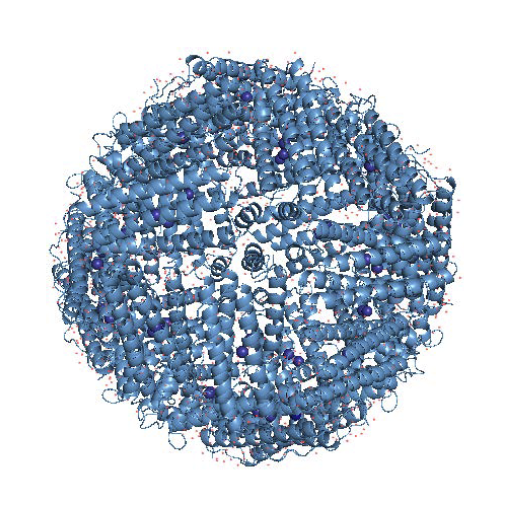
Figure 6. Human H Ferritin structure (without Fe inside core) solved using X-ray diffraction. Structure was downloaded from PDB (1FHA) and visualised using Pymol.⁴
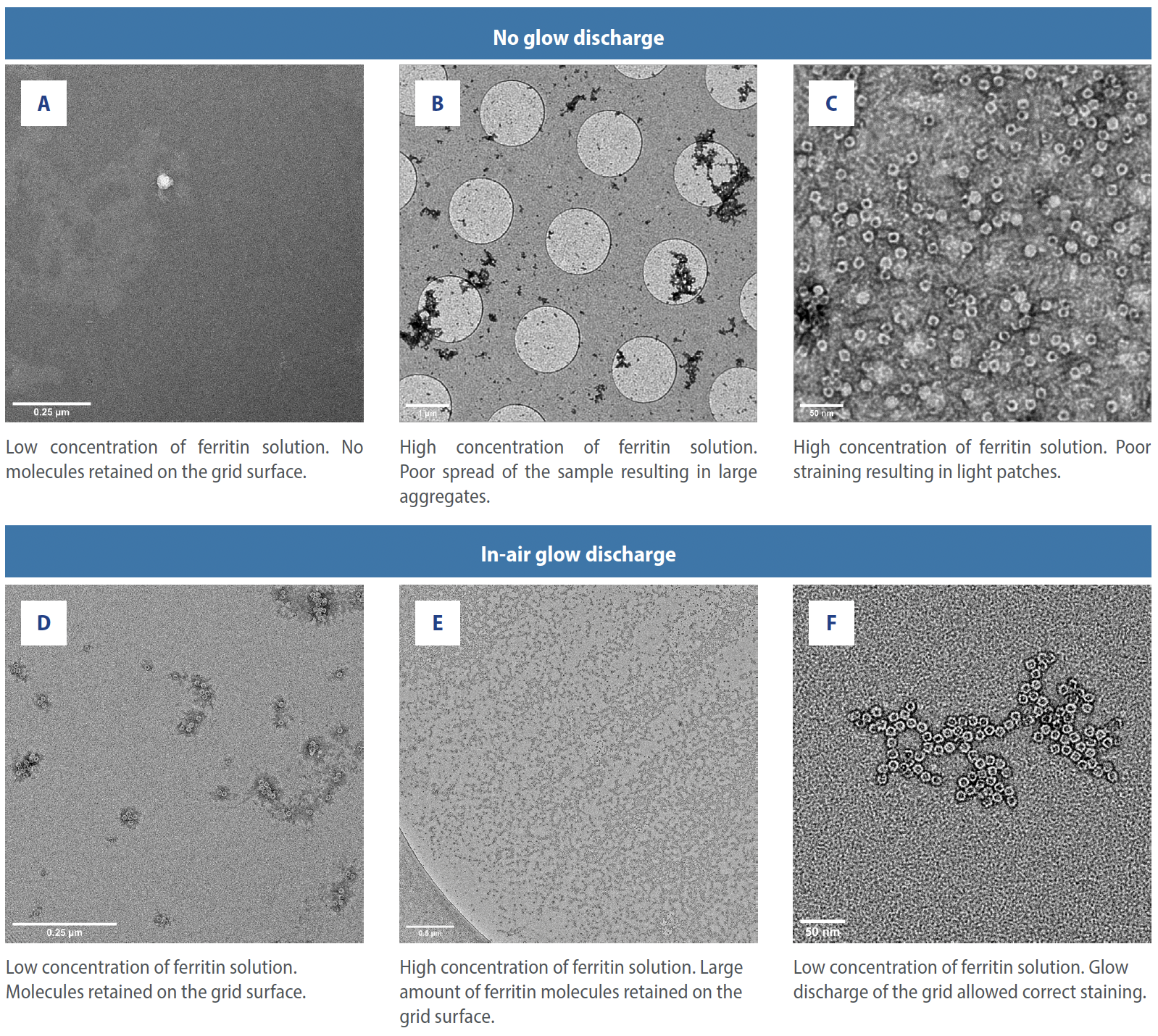
Figure 7. The effect of non- glow discharged carbon support TEM grid on retention, spread and staining quality of native ferritin sample solution. Low (6x10⁻⁴ μg/mL)and high (6x10⁻²μg/mL) concentrations of the protein were used.
When used in low concentrations without glow discharge, ferritin is not retained on TEM surfaces (Figure 7A). Although increased concentrations of ferritin result in retention on the TEM grid, the formation of aggregates is observed (Figure 7B). Uneven charge on the grid resulting from no glow-discharge can also hinder effective staining with uranyl acetate which results in ‘light patches’ between the proteins (7C).
As demonstrated, the use of glow discharge prior to sample loading allows retention of low concentration of ferritin, and promotes uniform staining of the sample to produce clear, accurate imaging.
In-chemical vapour glow discharge can also be used to further study native ferritin. All ferritin molecules are made of 24 identical peptide subunits that fold into a spherical shell with a water filled cavity inside. This cavity is connected to the outside through channels with threefold and fourfold symmetry and is thought to provide permeation pathways for iron ions and protons, essential for proper functioning of ferritin as an iron depository. Apoferritin (an empty shell of ferritin) is also used as an ion cage for templated synthesis of nanoparticles- ZnSe or CdSe. Imaging of the iron ‘load’ stored in the ferritin nanocage plays a significant role in studying the uptake of iron and other metals.
During the process of in-air glow discharge, highly reactive oxygen radicals (O• and OH•) are formed. The radicals result in oxidative damage of organic molecules, which results in the abstraction of Fe3+ ions from the ferritin nanocage. In-methanol glow discharge produces less reactive radical species (CH₃• and H•), and can therefore be used to prevent loss of iron load from the nanocage (Figure 8).
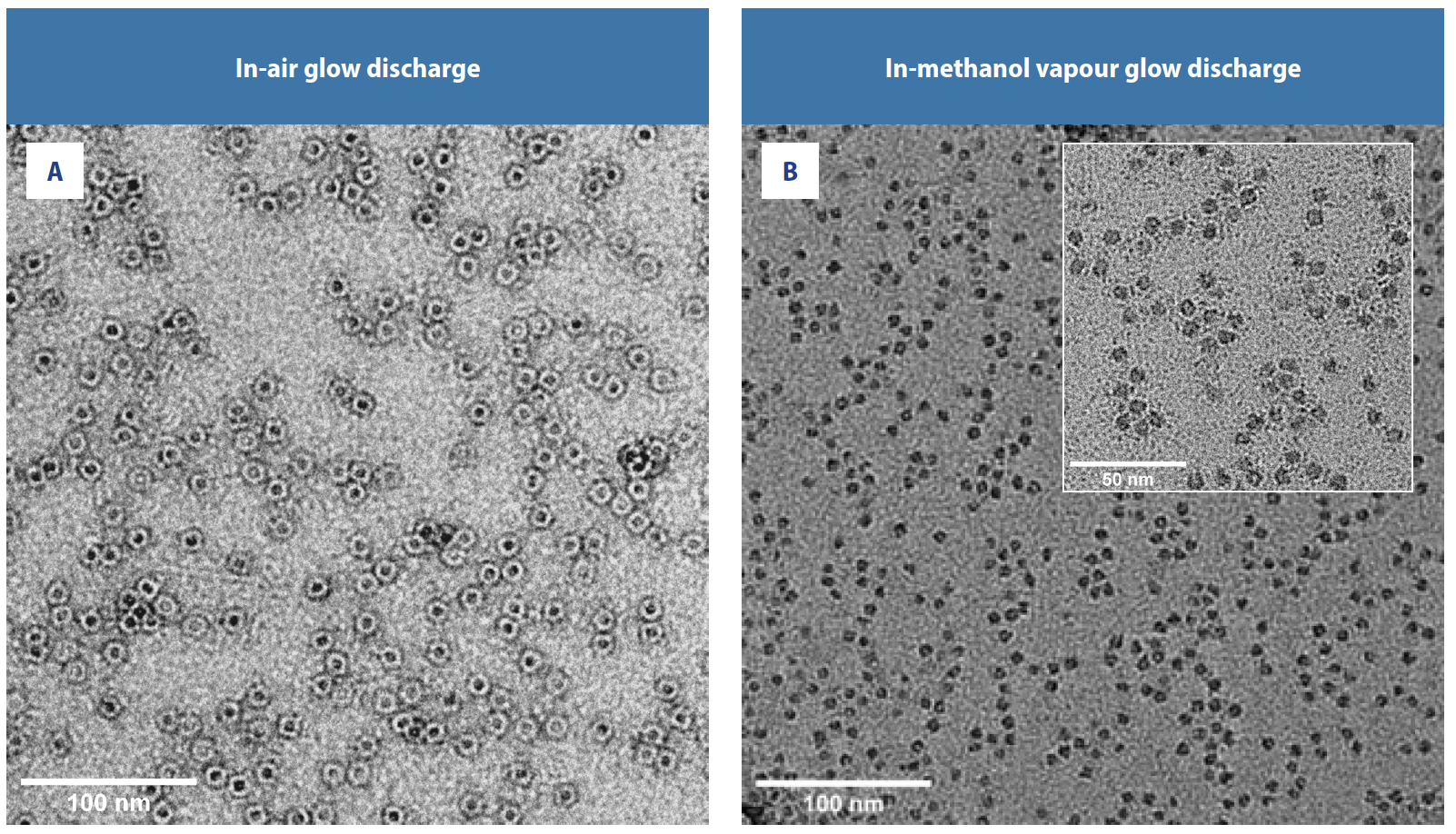
Figure 8. TEM images of ferritin protein complex from horse spleen (Sigma Aldrich) applied to in-air and in methanol vapor glow discharged carbon support TEM grids.
Case Study: 20s Proteasome
Proteasomes are enzymatic proteins responsible for the proteolytic degradation of misfolded and short-lived regulatory proteins within eukaryotic cells. This process occurs through the ubiquitin proteasome system (UPS), whereby target proteins are tagged through bonding with ubiquitin and are subsequently identified by 26S proteasome.⁵ 26S proteasome comprises of two main parts: the 20S core particle and the 19S regulatory particle. The study of the catalytic core (20S proteasome, see Figure 9) is key to understanding diseases like cancer and neurogenerative disorders.
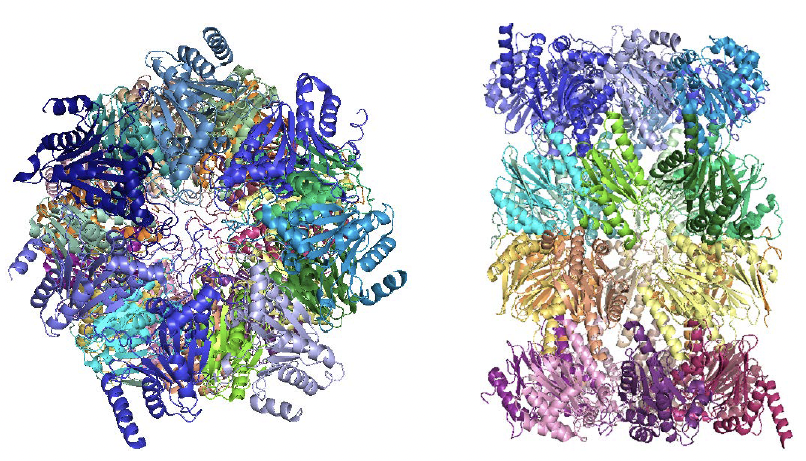
Figure 9. Left: Top-view of 20s proteasome structure. Right: Side-view of 20s proteasome structure. Structure was downloaded from PDB (6RGQ) and visualised using Pymol.⁶
In-alkylamine glow discharge can be used to produce positively charged, hydrophobic films on carbon support grids. This technique can be used to attract negatively charged areas of interest on proteins and result in the preferential orientation of proteins. ⁷ In this case study, carbon support TEM grids were modified in a GloQube Plus using an amylamine vapour glow discharge process to achieve hydrophobic and positively charged surfaces that are functionalised with amines to retain side-views of 20s proteasome complex. The effect of altering the surface charge of carbon support film on the orientation of the protein complex can be seen in Figure 10.
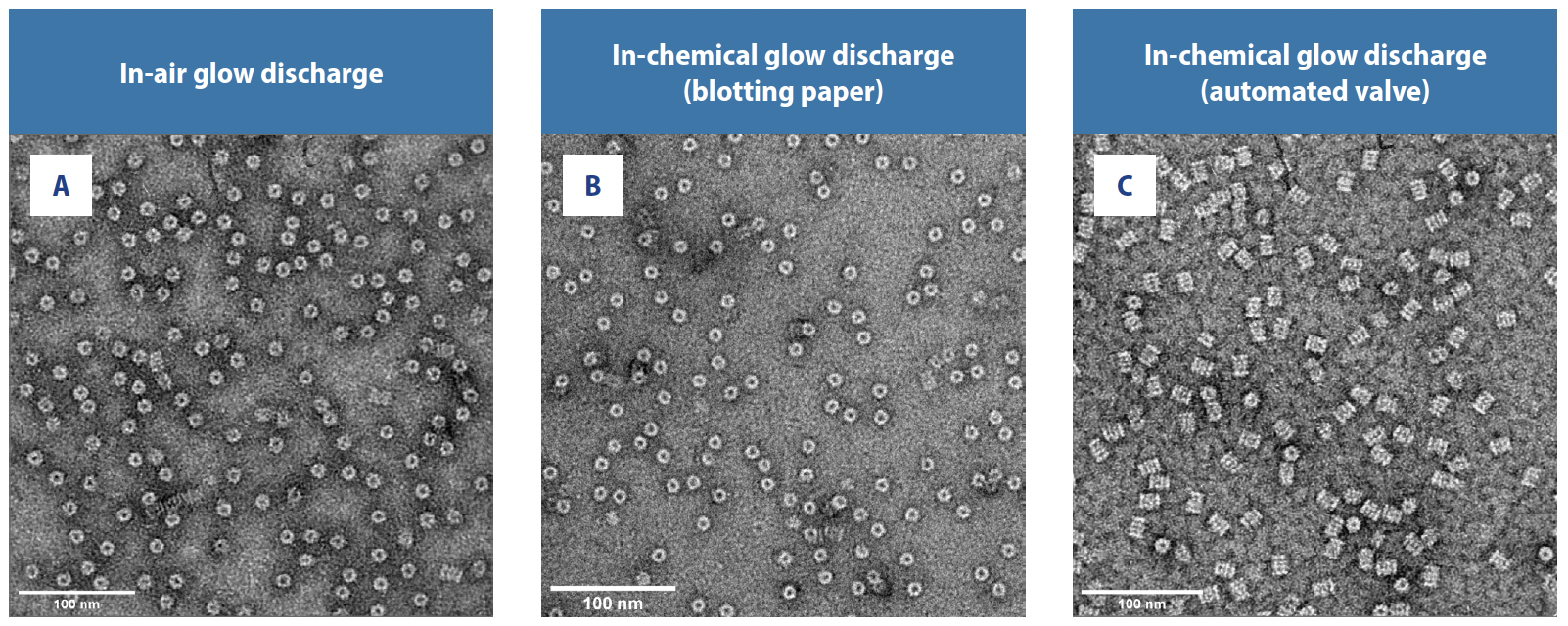
Figure 10. TEM images of 20s human proteasome complex showing the effect of altering the surface charge of the carbon support film on the orientation of the protein molecules. Carbon film of 2.5nm thickness on Quantifoil 1.2/1.3 400 mesh was used as a support for the sample.⁸
The 20s human proteasome complex sample in TRIS buffer solution (3x10⁻²μg/mL) was applied on three types of carbon support TEM grids: no-glow discharge, glow-discharge in air; and glow discharge in amylamine vapour. Where no glow discharge was applied (Figure 10A), some side-views were observed due to the fact that freshly prepared carbon surface is non-uniformly charged and hydrophobic. After treating the grids with in-air glow discharge (Figure 10B), only top views could be seen as this treatment makes carbon films negatively charged and hydrophilic. This attracts the positively charged top/bottom part of the proteasome complex resulting in biased top-views orientation. When in-amylamine vapour glow discharge was used (Figure 10C), the majority of the 20s proteasome complex molecules were observed in the side-view orientation.
REFERENCES:
1. De Graef, M., 2003. Introduction to conventional transmission electron microscopy. Cambridge university press.
2. Bogaerts, A. The glow discharge: an exciting plasma! J Anal At Spectrom 14, 1375–1384 (1999).
3. Wang, L. & Zimanyi, C. M. Cryo-EM sample preparation for high-resolution structure studies. Acta Crystallographica Section F 80, 74–81 (2024).
4. Lawson, D. M. et al. Solving the structure of human H ferritin by genetically engineering intermolecular crystal contacts. Nature 349, 541–544 (1991).
5. Unno, M. et al. The structure of the mammalian 20S proteasome at 2.75 Å resolution. Structure 10, 609–618 (2002).
6. Toste Rêgo, A. & da Fonseca, P. C. A. Characterization of Fully Recombinant Human 20S and 20S-PA200 Proteasome Complexes. Mol Cell 76, 138-147.e5 (2019).
7. Dubochet, J., Ducommun, M., Zollinger, M. & Kellenberger, E. A new preparation method for dark-field electron microscopy of biomacromolecules. J Ultrastruct Res 35, 147–167 (1971).
8. Morris, E. P. & Da Fonseca, P. C. A. High-resolution cryo-EM proteasome structures in drug development. Acta Crystallogr D Struct Biol 73, 522–533 (2017).
Was this article helpful?
That’s Great!
Thank you for your feedback
Sorry! We couldn't be helpful
Thank you for your feedback
Feedback sent
We appreciate your effort and will try to fix the article